









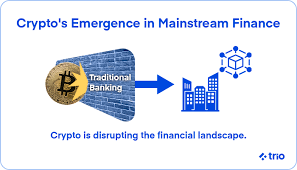
The global financial industry is experiencing a significant transformation, driven by rapid technological advancements. Among the most influential developments is the rise of cryptocurrency, a digital form of money that operates independently of traditional banking institutions.
Over the past decade, digital currencies such as Bitcoin, Ethereum, and Ripple have attracted attention from investors, technology experts, governments, and financial institutions. While cryptocurrencies were initially viewed as speculative digital assets, many experts now believe that the underlying blockchain technology could reshape how global banking systems operate.
As financial institutions explore digital innovations, the relationship between cryptocurrencies and traditional banks continues to evolve. Understanding this relationship is essential for predicting how the future of global finance may unfold.
What is Cryptocurrency?
Cryptocurrency is a digital or virtual currency that relies on cryptographic technology to secure transactions and control the creation of new units. Unlike traditional currencies issued by central banks, cryptocurrencies operate on decentralized networks built on blockchain technology.
A blockchain is a distributed digital ledger that records transactions across many computers simultaneously. Because the data is shared and verified by multiple participants in the network, it becomes extremely difficult to alter or manipulate.
This decentralized structure allows users to conduct peer-to-peer financial transactions without relying on intermediaries such as banks or payment processors. As a result, cryptocurrency transactions can often be faster, cheaper, and more transparent than conventional banking transfers.
Some of the most widely recognized cryptocurrencies include:
- Bitcoin (BTC) – The first cryptocurrency, introduced in 2009, and still the most widely known digital asset.
- Ethereum (ETH) – A blockchain platform that supports decentralized applications and smart contracts.
- Ripple (XRP) – A digital payment network designed to facilitate fast international money transfers.
Each of these digital currencies serves different purposes, but they all demonstrate the potential of blockchain technology to transform financial systems.
How Cryptocurrency is Transforming Global Banking
Cryptocurrency is gradually influencing how financial institutions approach payments, security, and digital services. Although traditional banks remain central to the global economy, digital currencies are encouraging innovation in several important areas.
Faster and More Affordable Cross-Border Payments
International money transfers through traditional banking systems can take several days to complete. These transactions typically pass through multiple financial intermediaries, which increases both processing time and transaction fees.
Cryptocurrencies offer an alternative approach by enabling direct peer-to-peer transactions. In many cases, transfers can be completed within minutes, regardless of geographic location. Lower transaction costs make cryptocurrency particularly attractive for global commerce and remittances.
For businesses and individuals who frequently send money internationally, blockchain-based payment systems may significantly improve efficiency.
Expanding Financial Inclusion
Access to banking services remains limited in many parts of the world. According to global financial inclusion studies, hundreds of millions of people remain unbanked, often due to geographic barriers, limited infrastructure, or strict banking requirements.
Cryptocurrency can help address this issue by allowing individuals to access financial services through digital wallets. With only a smartphone and internet connection, users can store assets, send payments, and receive funds without opening a traditional bank account.
This technological shift could make financial services more accessible to people in developing economies and underserved communities.
Decentralization and Increased Transparency
Traditional banking systems operate under centralized authority, where financial institutions manage accounts, process transactions, and maintain financial records.
In contrast, cryptocurrency networks distribute control across thousands of computers worldwide. Every transaction is recorded on a public blockchain ledger, which enhances transparency and accountability.
Because blockchain records are permanent and verifiable, this technology can reduce fraud risks and improve trust in digital financial transactions.
Smart Contracts and Automation in Finance
One of the most innovative features of blockchain technology is the development of smart contracts. These are self-executing agreements programmed into blockchain networks that automatically carry out transactions when predetermined conditions are met.
For example, a smart contract could automatically release payment once a shipment is delivered or a service is completed. By automating agreements, smart contracts can eliminate the need for intermediaries in various financial processes.
Banks and financial technology companies are exploring how this technology could streamline operations in areas such as:
- Loan agreements
- Insurance claims processing
- Trade finance
- Asset management
The automation provided by smart contracts could reduce administrative costs and increase efficiency across the financial sector.
Challenges and Risks of Cryptocurrency in Banking
Despite the many advantages of digital currencies, several challenges must be addressed before cryptocurrency can become a mainstream component of the global banking system.
Regulatory Uncertainty
Governments and financial regulators worldwide are still developing policies for cryptocurrency markets. Because digital currencies operate across borders, establishing consistent regulations can be difficult.
Regulatory uncertainty can slow institutional adoption, as banks and financial companies must ensure compliance with local financial laws.
Market Volatility
One of the most widely discussed concerns about cryptocurrency is its price volatility. Digital assets often experience rapid price fluctuations, which can create risks for investors and businesses that rely on stable currencies for transactions.
Until volatility stabilizes, cryptocurrencies may continue to be used more as investment assets rather than everyday payment methods.
Security Concerns
Although blockchain technology itself is highly secure, cryptocurrency platforms such as exchanges and digital wallets can sometimes become targets for cyberattacks.
Several high-profile hacking incidents have highlighted the importance of strong security practices within the digital asset ecosystem. Improving cybersecurity measures will remain a critical priority for the industry.
Limited Public Understanding
Another barrier to widespread adoption is the lack of public knowledge about cryptocurrency and blockchain technology. Many people remain uncertain about how digital currencies work, how to store them safely, or how they fit into the broader financial system.
Educational initiatives and clearer regulatory guidance will play a crucial role in building public trust in cryptocurrency.
The Role of Central Bank Digital Currencies (CBDCs)
As cryptocurrencies gain global attention, many governments are exploring their own digital currency initiatives. These government-backed digital currencies are known as Central Bank Digital Currencies (CBDCs).
Unlike decentralized cryptocurrencies, CBDCs are issued and regulated by central banks. They aim to combine the convenience of digital payments with the stability and oversight of traditional financial systems.
Several countries are currently researching or testing CBDC projects, indicating that digital currency may become an important component of future financial systems.
What the Future of Global Banking May Look Like
Rather than replacing traditional banks entirely, cryptocurrency and blockchain technology are more likely to integrate with existing financial systems. Many experts expect the future of finance to involve a hybrid model where traditional institutions adopt blockchain innovations to improve efficiency.
Potential developments in the coming years may include:
- Faster international payment systems
- Reduced reliance on physical cash
- Greater transparency in financial transactions
- Expansion of decentralized finance (DeFi) platforms
- Increased financial access for underserved populations
As technological innovation continues, both banks and cryptocurrency platforms may collaborate to create more secure and efficient financial infrastructure.
Frequently Asked Questions (FAQ)
Is cryptocurrency replacing traditional banks?
Cryptocurrency is unlikely to fully replace traditional banks. Instead, it is expected to complement existing financial systems by introducing faster and more efficient digital payment solutions.
Why are banks interested in blockchain technology?
Banks are exploring blockchain because it can improve transaction efficiency, reduce operational costs, and enhance transparency in financial systems.
Is cryptocurrency safe to use?
Cryptocurrency transactions on blockchain networks are highly secure, but users must protect their digital wallets and accounts from cyber threats.
Will governments regulate cryptocurrency?
Yes. Many governments are currently developing regulations to manage cryptocurrency markets and protect consumers.